
Get in touch with DEMIKS Company

DEMIKS · High-Voltage Insulation Diagnostics
Partial Discharge Test Equipment for Factory, Laboratory and Field Testing
DEMIKS supplies partial discharge test equipment, PD-free AC test systems up to 250 kV, shielded PDIV testers and online monitoring solutions. We help engineers detect insulation defects in transformers, switchgear, power cables and rotating machines before dielectric breakdown occurs.
- DJF-126 4-channel PD detector with 0.1 pC sensitivity and 0.1 pC to 100,000 pC measurement range
- PD-free AC test systems from 1 kVA / 5 kV to 250 kVA / 50 kV and 50 kVA / 250 kV (customizable up to 1000 kVA and 1000 kV) with background PD ≤1 pC
- Shielded PDIV test cabins (<5 pC background) and overseas installation, commissioning and operator training
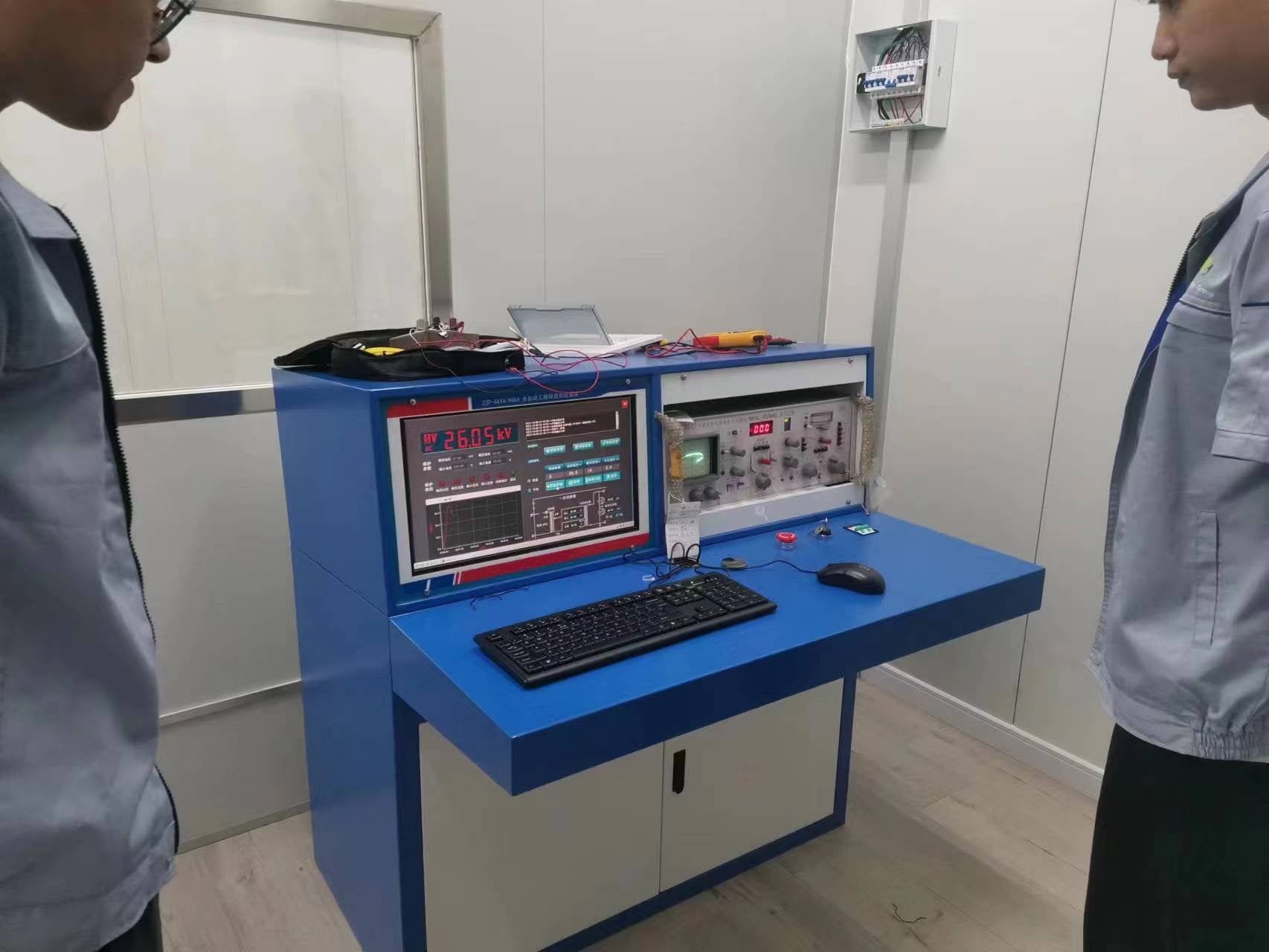
0.1 pCDJF-126 PD detector sensitivity (0.1–100,000 pC)
≤1 pCSystem partial discharge background noise
1–1000 kVARated capacity (catalog sets 0–250 kV)
12-bit / 10 MHzSampling accuracy with 1, 5, 10 MHz rates
6 pF – 250 µFTested specimen capacitance coverage
50–400 HzTest power source frequency range
Partial Discharge Test Equipment Architecture and Four Solution Pathways
Partial discharge testing and monitoring solutions begin with differentiating between portable spot instruments, complete high-voltage AC test bays, shielded component chambers, and continuous substation sensors. Each defines a unique testing methodology, frequency range, and stage of insulation diagnosis.
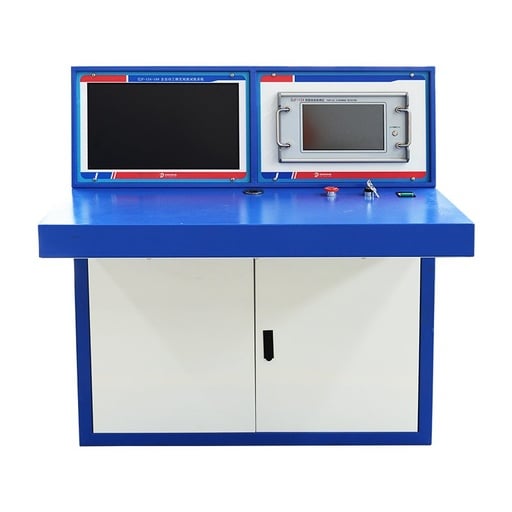
Partial Discharge Tester (DJF-124 / 125 / 126 / 127)
Multi-channel digital detectors capture phase-resolved partial discharge pulses across 10 kHz to 1 MHz filter bands. Features a 10.1-inch touch screen with 9 band combinations, while the 4-channel DJF-126 prevents three-phase cross-talk during acceptance tests.
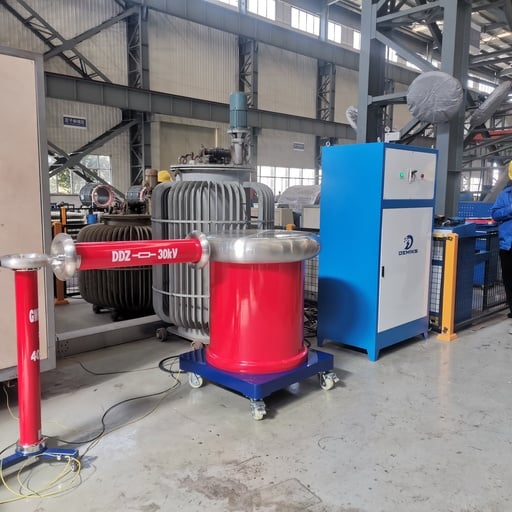
Partial Discharge Test System (DJF & YDW Series)
Complete offline PD testing requires a PD-free AC source, coupling capacitor, measuring impedance and divider. Our oil-immersed (<55°C) and SF6 gas-insulated (<50°C) transformers maintain background noise at ≤1 pC under rated voltage.
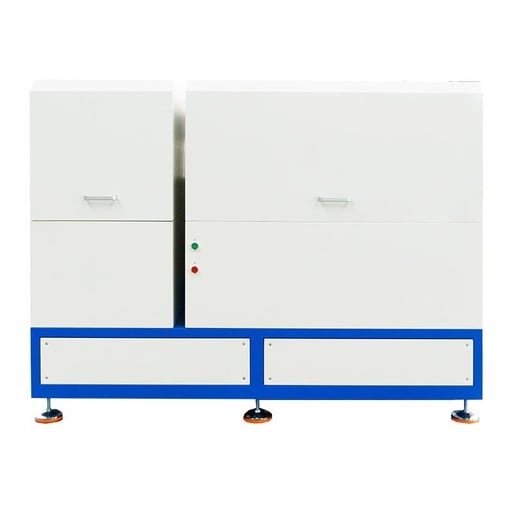
PDIV Tester with Shielding Cabin
Electric motor stators, EV hairpin windings and electronic components require inception voltage testing without shop-floor interference. Paired with an electric-door shielding cabin (<5 pC background) and >20 programmable stages.
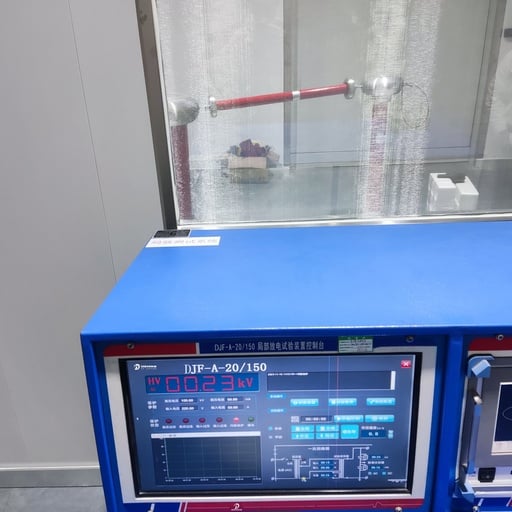
Partial Discharge Monitoring (Online PD Sensors)
Continuous online PD monitoring systems permit the diagnosis of insulation degradation in energized switchgear, power cables and transformers. HFCT, TEV, UHF and ultrasonic transducers monitor internal PD and corona discharges in real time.
Test Objects and Insulation Applications
Electrical assets exhibit different discharge physics, signal attenuation and capacitive charging requirements. Match sensor bandwidth to the test environment prior to selecting a partial discharge testing machine or high-voltage source.
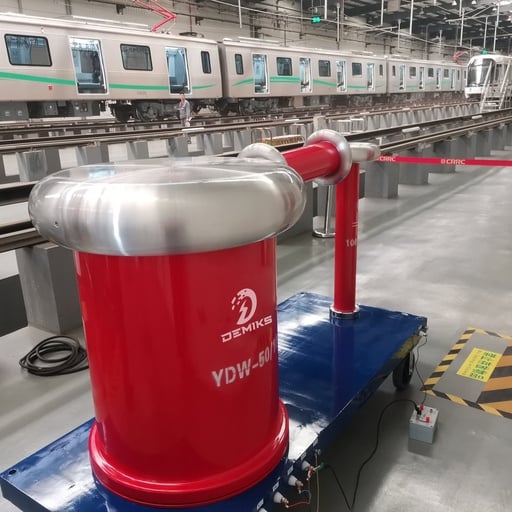
Power transformers and bushings
Insulation evaluation of paper-oil barriers and capacitively graded bushings on power transformers is achieved through factory and site PD measurements. Four acquisition channels permit internal void monitoring and differentiate corona discharges across phases.
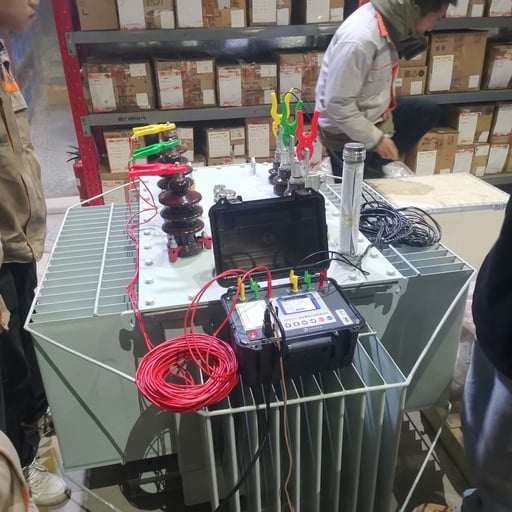
High-voltage power cables and joints
Partial discharge testing of cables covers factory reel qualification (6 pF to 250 µF lumped capacitance) and field commissioning. Long routes behave as distributed impedances, requiring distributed HFCT sensors at link boxes.
Switchgear and rotating machines
MV air-insulated and GIS switchgear experience particle movement and surface tracking. Online TEV and UHF sensors identify intermittent arcing, while offline AC resonance sets confirm phase-to-phase withstand integrity.
PD-Free AC Test Systems and Capacitive Load Matching
Testing highly capacitive assets requires matching the high-voltage transformer kVA rating and regulator capacity to charging current demands. DEMIKS engineers supply oil-immersed, SF6 gas-insulated, dry-type and variable-frequency resonant systems tailored to specimen parameters.
| System Architecture | Rated Output | Specimen Charging Current | Background PD |
|---|---|---|---|
| DJF Oil-Immersed PD-Free System | 10 kVA / 50 kV to 250 kVA / 50 kV | 0.2 A to 5.0 A continuous | ≤1 pC (catalog) / ≤2 pC |
| DJF High-Voltage Transformer Bay | 50 kVA / 100 kV to 50 kVA / 250 kV | 0.5 A to 0.2 A high-potential | ≤1 pC to ≤3 pC |
| SF6 Gas-Insulated System | 10 kVA / 100 kV to 30 kVA / 150 kV | 0.1 A to 0.2 A clean-room | ≤1 pC (compact bay) |
| Shielded PDIV Component Station | 1 kVA / 7.5 kV to 5 kVA / 5 kV | 0.13 A to 1.0 A low-voltage | ≤5 pC (integrated chamber) |
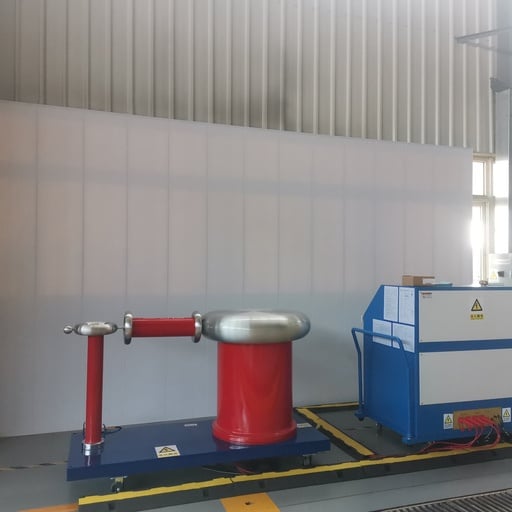
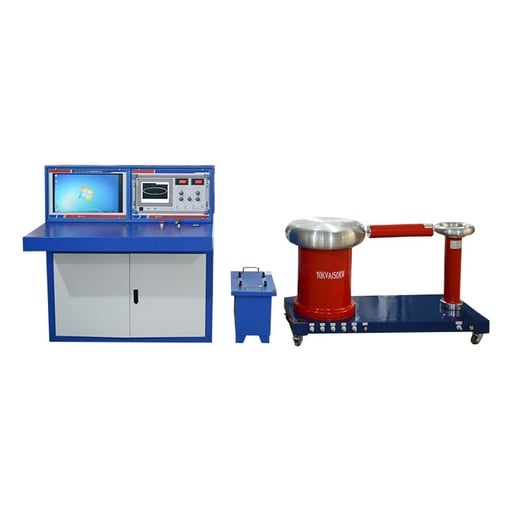
DEMIKS DJF-50kVA/100kV: High-voltage PD-free AC test bay equipped with coupling capacitor, damping resistor and integrated console.
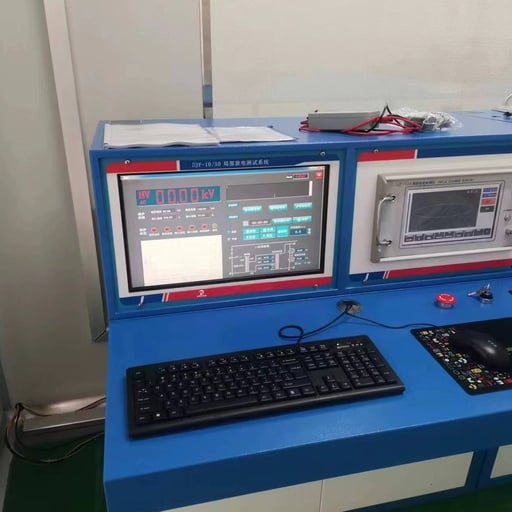
DJF Multi-Channel Console: Phase-resolved partial discharge analyzer with real-time waveform capture and 10.1″ operator interface.
Partial Discharge Test Equipment Specifications and Measurement Limits
The DJF instrument series meets IEC 60270:2025 sensitivity and pulse-resolving requirements. Below are the standard operational parameters for digital PD consoles and high-voltage test sources.
| Parameter | DJF-124 / 125 Series | DJF-126 4-Channel System | High-Voltage Source Limit |
|---|---|---|---|
| Input Channels | 1 to 2 channels | 4 independent channels | Single-phase or three-phase |
| Sensitivity | 0.1 pC | 0.1 pC | System noise ≤1 pC |
| Bandwidth | 10 kHz to 1 MHz (9 bands) | 10 kHz to 1.2 MHz selectable | 50 Hz / 60 Hz / 50–400 Hz |
| Sampling Rate | 10 MHz / 12-bit AD | 10 MHz synchronous AD | Continuous monitoring |
| Dynamic Range | >80 dB linear range | >85 dB multi-gain range | 1 kVA to 1000 kVA scalable |
Partial Discharge Test Equipment Price and Lead Time Guidance
System pricing correlates with transformer voltage rating, system background noise guarantee (<1 pC vs <5 pC), number of acquisition channels and shielding cabin integration.
| Configuration Tier | System Voltage / Spec | Estimated Budget Range | Standard Lead Time |
|---|---|---|---|
| Digital PD Detector Unit | DJF-124 / 127 1–2 Channel Console | $4,800 – $9,500 | 2 to 3 weeks (ex-stock) |
| Shielded PDIV Test Station | 1–5 kVA / 5–10 kV with Cabin | $14,500 – $28,000 | 4 to 6 weeks |
| Turnkey AC PD Test System | 50–250 kVA / 50–100 kV Bay | $32,000 – $85,000 | 6 to 10 weeks |
| High-Voltage Custom Bay | Above 150 kV to 250 kV (Custom 1000 kV) | Request custom quote | 10 to 14 weeks |
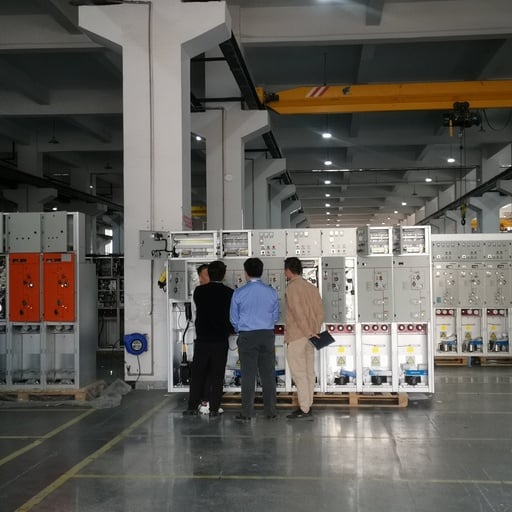
Export Packaging & Delivery: Solid sea-worthy wooden crating with shock protection, humidity control and factory acceptance documentation.
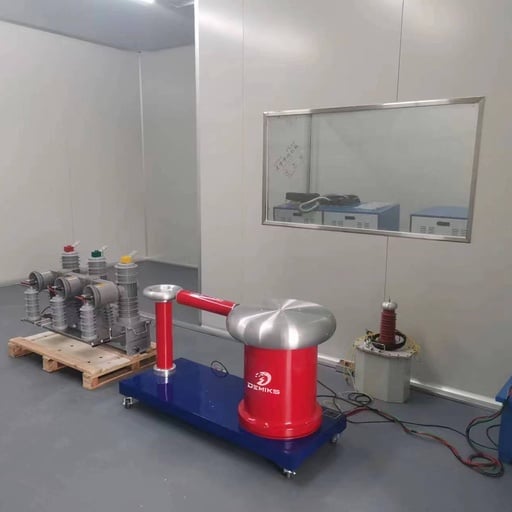
IEC 60270 Verification Bay: In-house calibration with standard pulse generator, coupling capacitor and RCF measuring impedance.
IEC 60270 Apparent Charge Calibration and Shielding Requirements
Accurate partial discharge measurement relies on quantitative calibration of apparent charge in picocoulombs (pC). Calibration pulses must be injected directly across test specimen terminals prior to applying test voltage.
- Direct terminal pulse injection: Calibrators inject a known charge (1 pC to 1000 pC) across the specimen and coupling capacitor loop.
- System transfer impedance scale factor: The console calculates circuit attenuation factors automatically, ensuring linearity across test voltages.
- Ground loop and isolation transformers: Power frequency isolation transformers and power filters attenuate mains noise by >60 dB.
- Shielding cabin attenuation: For component testing below 5 pC background, electric-door shielding rooms attenuate ambient noise by >80 dB.
Configuration and Ordering Process
Specifying high-voltage partial discharge equipment requires electrical engineering coordination. DEMIKS applies a structured five-step engineering workflow:
- Specimen Parameters Review: Capacitance range, maximum test voltage, test frequency, and target background PD level.
- System Capacity Matching: Transformer kVA, regulator rating, coupling capacitor and damping resistor sizing.
- Noise Mitigation Engineering: Shielding room dimensions, isolation filters, and high-frequency grounding layout.
- Factory Acceptance Testing (FAT): Complete bay assembly and <1 pC background verification in our Shanghai facility.
- Overseas Delivery and Commissioning: Sea-worthy crating, installation guidance, on-site commissioning, and operator training.
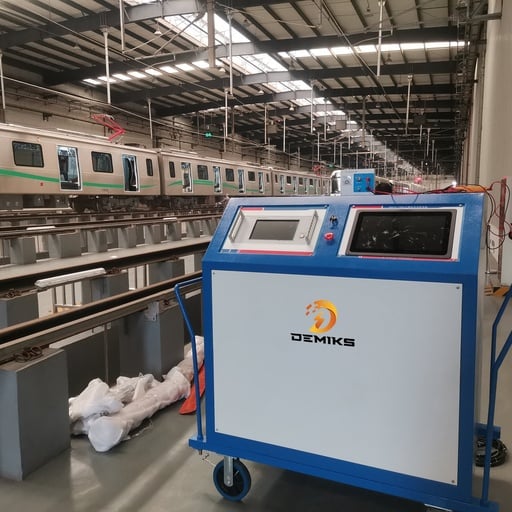
Engineering & FAT: Turnkey verification of whole test bay before export dispatch to guarantee zero site commissioning delays.
DEMIKS Supply Capability and Global Technical Support
DEMIKS operates specialized high-voltage manufacturing and testing facilities in Shanghai. We maintain full in-house capabilities for transformer winding, vacuum oil-filling, SF6 encapsulation, and digital instrumentation calibration.
Manufacturing Facility
Our Shanghai Lingang production base produces PD-free testing transformers up to 250 kV standard and 1000 kV custom, with clean-room assembly for SF6 gas-insulated equipment.
Quality & Standards
All instruments and transformers comply with IEC 60270:2025, IEC 60060-1, and IEEE 400.3. In-house calibration reports traceable to national metrology institutes accompany every unit.
Global Engineering Service
DEMIKS delivers worldwide with on-site commissioning engineers, remote diagnostic support, spare parts availability, and annual recalibration programs across 30+ countries.
Offline Acceptance Testing vs Online Partial Discharge Monitoring
Selecting between offline AC high-voltage test bays and continuous online monitoring systems depends on whether equipment is de-energized during factory acceptance, or energized in live substation operation.
Offline Factory & Field AC Testing
When to use: Factory acceptance testing (FAT), post-installation commissioning, and planned maintenance outages.
Advantages: Independent voltage regulation up to 250 kV; precise inception voltage (PDIV) detection; background PD controlled to ≤1 pC.
Online Condition Monitoring
When to use: Critical energized assets in substations, continuous 24/7 operating power plants, and industrial plants without planned shutdowns.
Advantages: No outage required; detects developing insulation degradation in real time; multi-sensor acoustic/HFCT/TEV fusion.
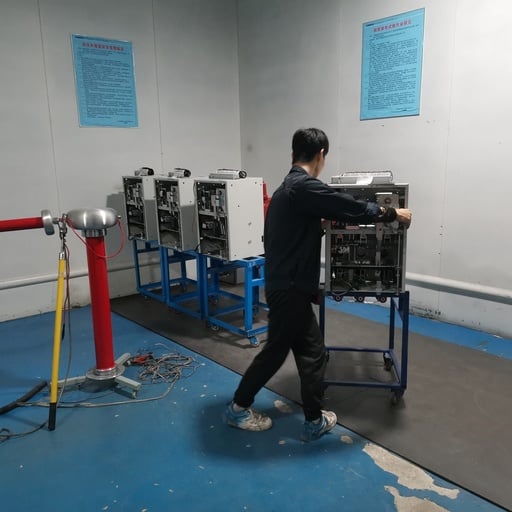
Application Selection: Dual-path insulation diagnosis matching laboratory precision or 24/7 substation operating monitoring.
Partial Discharge Test Equipment FAQ
What is the difference between partial discharge testing and high-voltage dielectric withstand testing?
High-voltage dielectric withstand testing (Hipot) applies an overvoltage to confirm that insulation does not break down catastrophically. However, a specimen can pass a withstand test while harboring internal voids and micro-defects that cause partial discharge. PD testing measures localized micro-breakdowns (in picocoulombs, pC) before dielectric breakdown occurs, providing an early warning of insulation degradation.
How do DEMIKS test transformers achieve ≤1 pC partial discharge background noise?
Our PD-free transformers use vacuum-degassed transformer oil, graded electrostatic shielding between windings, rounded high-voltage toroids, and SF6 gas encapsulation where required. Power supply filtering reduces mains noise by >60 dB, allowing reliable detection down to 0.1 pC.
Can the DJF series partial discharge test system be used for on-site cable testing?
Yes. For long high-voltage cables with large capacitance, we pair the DJF-126 multi-channel detector with a variable-frequency resonant test system (20–300 Hz) to reduce test power demand, combined with distributed HFCT sensors at cable link boxes.
What calibration standards do DEMIKS partial discharge testers comply with?
All DEMIKS PD detectors and calibration generators comply with IEC 60270:2025, IEC 60060-1, and IEEE 400.3 standards. Calibration certificates traceable to national metrology institutes are provided with each system.
Does DEMIKS provide on-site commissioning and operator training internationally?
Yes. DEMIKS provides overseas on-site commissioning, system installation guidance, and operator training for laboratory and substation acceptance testing worldwide.