
Get in touch with DEMIKS Company

Shanghai DEMIKS · Lingang High-Voltage Equipment Manufacturer
High-Voltage Hipot Testers & Dielectric Withstand Test Systems (5 kV to 400 kV)
We manufacture industrial hipot testers, series resonant systems, and 0.1 Hz VLF dielectric test sets in Shanghai. Our high voltage test equipment helps with factory quality assurance and commissioning of substations worldwide. Our equipment can match your specified waveform, reactive kVA, and metering to your specified capacitance.
- 5 kV to 300 kV AC & AC/DC
- 60 kV to 400 kV PWM DC
- 30 kV to 90 kV Peak 0.1 Hz VLF
- 44 – 540 kVA Series Resonant
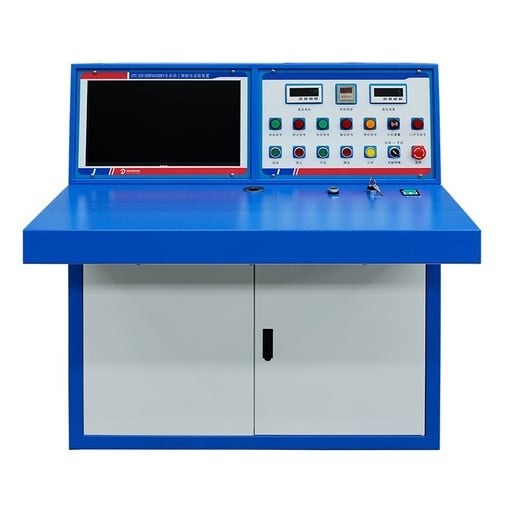
DEMIKS Hipot Test Equipment Specifications at a Glance
Procurement teams and high-voltage engineers can review our voltage envelopes and commercial terms below. These represent our standard factory build in Shanghai.[1]
5 kV to 300 kV AC transformers (1.5–300 kVA) and 44 kVA to 540 kVA series resonant systems (20–300 Hz).
60 kV to 400 kV PWM DC hipot sets (2–10 mA) and 30 kV to 90 kV peak sinusoidal VLF testers (VLF-TD down to 22 kg).
±0.5% console voltage and current metering accuracy, ≤1% DBP-DL resonant sine THD, and ≤0.5% ZGF DC ripple.
1 set MOQ, engineer quotes within 24 business hours, and standard dispatch within 15 days in export wooden cases.
| Commitment Parameter | DEMIKS Factory Specification & Commercial Term |
|---|---|
| Manufacturing Base | Established in 2025 in the Lingang Special Area of the China (Shanghai) Pilot Free Trade Zone |
| Minimum Order & Sample Policy | 1 set minimum order; single-unit evaluation orders are supported, though free samples are not offered |
| Quotation & Standard Lead Time | Itemized engineer proposal within 24 business hours; standard catalog units ship within 15 days after payment confirmation |
| Payment, Crating & Inspection | T/T wire transfer with a 50% deposit and 50% balance before delivery; packed in foam-lined export wooden cases with a serial-numbered factory routine test report and English operating manual |
| Warranty & Overseas Support | 12-month warranty with 3-month defect replacement (within three months of delivery); paid overseas on-site installation, commissioning, and operator training available |
High-Voltage Hipot Test Equipment Capabilities and Partial Discharge Architecture
Field failures occur when customers consider a high potential test as just a voltage source check. On shielded power cables and GIS busbars, the dominant power demand is from capacitive charging current. Crews also have difficulties in determining a trip threshold when steady charging milliamps mask the real insulation breakdown.
| Dielectric Test Architecture | DEMIKS Series | Output Frequency & Waveform | Primary Specimen & Governing Standard |
|---|---|---|---|
| Power-Frequency AC Dielectric Test Set | YDJ / YDQ / GYD / YDW | 50 Hz / 60 Hz sinusoidal alternating current | Switchgear (IEC 62271), power transformers (IEC 60076-3)[4], and insulators per IEC 60060-1[1] |
| Variable-Frequency Series Resonant System | DBP-DL + DDK Reactors | 20 Hz – 300 Hz sinusoidal output (THD ≤ 1%) | Extruded XLPE cable commissioning: IEC 60840 (>30–150 kV) and IEC 62067 (>150–500 kV)[3] |
| Very Low Frequency Sinusoidal Hipot & Tan-Delta | DVLF / VLF-TD | 0.1 Hz, 0.05 Hz, 0.02 Hz sinusoidal AC | Shielded MV XLPE cable testing (≥5 kV) and tan delta diagnostics per IEEE 400.2-2024[2] |
| High-Frequency PWM Direct Current Hipot | ZGF Series | DC output with ripple factor ≤ 0.5% | Cable outer oversheaths (IEC 60840 Clause 16.2), PILC cables, and ZnO arrester 0.75 Udc1mA leakage checks |
Voltage rating alone cannot determine the size of dielectric testing equipment above 35 kV. Selecting a low-noise YDW transformer for a partial discharge test to facilitate commissioning is essential when your test standard limits background interference.”
Senior High-Voltage Application Engineering Team, Shanghai DEMIKS
To overcome steady capacitive current and a rapid breakdown dI/dt spikes in one of our equipment, we offer a special console. For combined dielectric withstand voltage testing and partial discharge checks, we provide a YDW PD-free transformer, along with a standard YDJ and YDQ units for electrical safety testing.
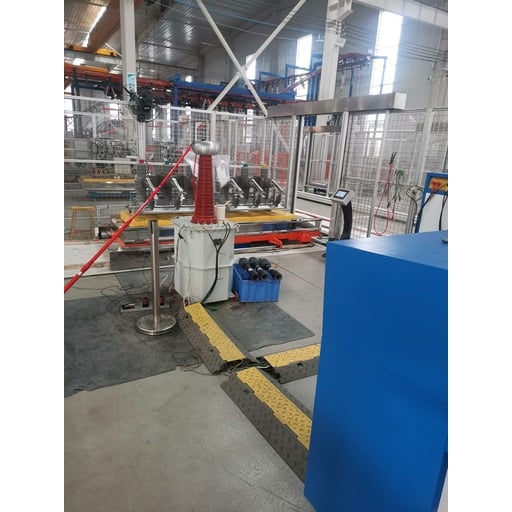
AC, DC, VLF Tan-Delta, AC/DC, and Portable Hipot Tester Modules
Each insulation system requires a different combination of resonant components to function. We offer five core hipot tester product lines, and other modular resonant stacks. Each HV unit is paired with one of our manual, digital, or touchscreen consoles.
1. AC Hipot Tester (YDJ / YDQ / GYD / YDW)
Rated 5 kV to 300 kV and 1.5 kVA to 300 kVA across oil-immersed (YDJ), SF6 gas (YDQ), cast-resin dry (GYD), or PD-free (YDW) AC Hipot Testers.
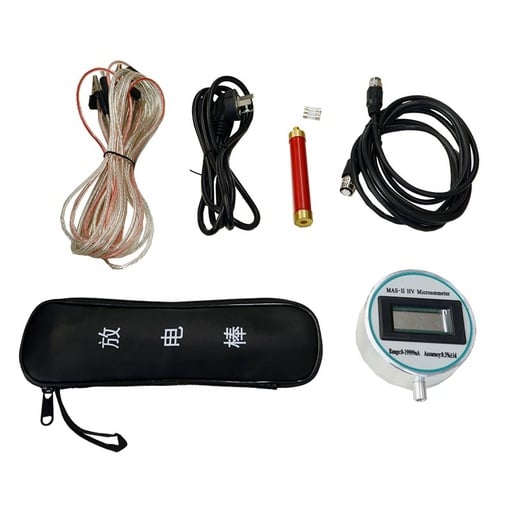
2. DC Hipot Tester (ZGF Series)
High-frequency PWM direct current generators rated 60 kV to 400 kV at 2 mA to 10 mA. Includes ≤0.5% ripple, shielded microammeters, and a one-touch 0.75 Udc1mA latch feature for ZnO arresters.
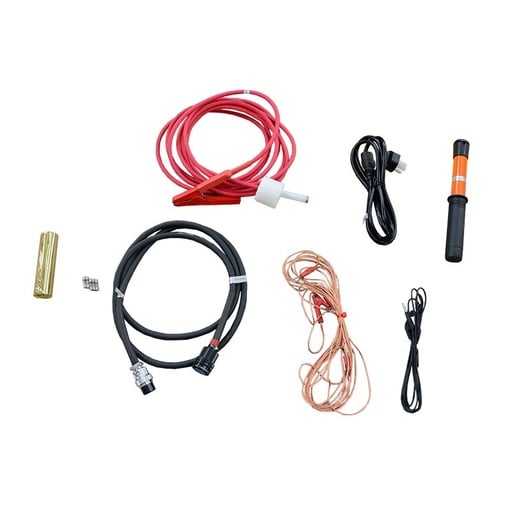
3. VLF Tester (DVLF & VLF-TD Series)
Sinusoidal 0.1 Hz, 0.05 Hz, and 0.02 Hz low frequency sets rated 30 kV to 90 kV peak (DVLF) and 34 kV / 80 kV (VLF-TD). Capacitive load capacity spans 0.01 μF up to 5.5 μF at 0.02 Hz[5].
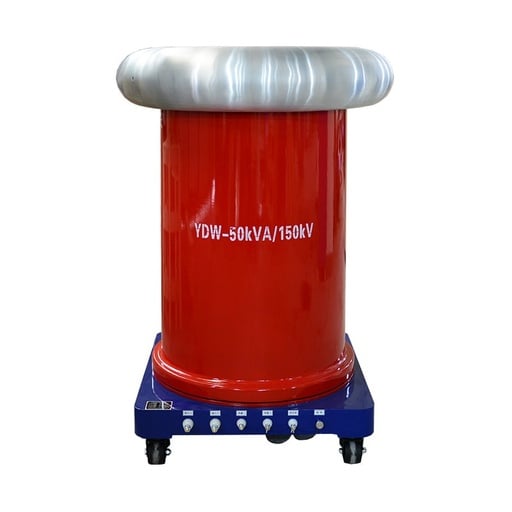
4. AC DC Hipot Tester (TDM Series)
Dual-mode oil-immersed transformers rated up to 300 kV with a high-voltage silicon rectifier stack. Laboratories run both 50/60 Hz AC withstand and DC leakage tests from one tank.
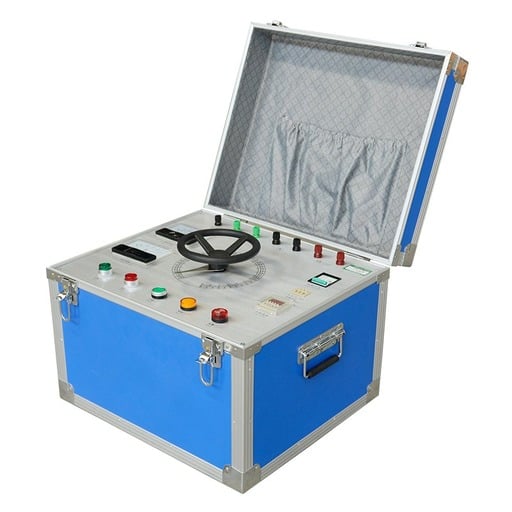
5. Portable Hipot Tester (DXC & Field Cases)
Engineered for trench and substation mobility. Includes our 22 kg (48.5 lb) Peli-cased VLF-TD unit, wheeled DXC suitcase consoles, and compact YDQ gas cylinders for service vans.
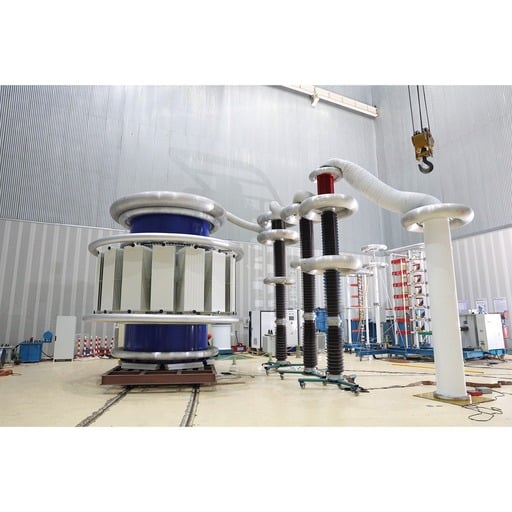
6. DBP-DL Series Resonant & Custom Systems
Variable-frequency drive exciters and stackable DDK reactors rated 44 kVA to 540 kVA (20–300 Hz). We also supply custom cable thermal-cycling and electrical temperature-rise test systems.
Dielectric Insulation Media, Control Consoles, and IEC/IEEE Withstand Standards
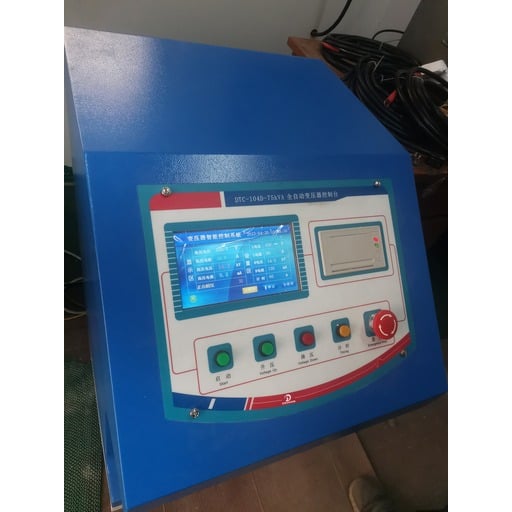
Insulation media and console design govern unit weights, thermal duty and transport/handling. Technicians also have complained about confusing panel meter scales and domestic-only menus on imported HV boxes. Every DEMIKS export console employs clear English legends, direct HV divider readouts, and RS-232 or USB export.
| Subsystem Option | Model Code | Key Technical Attribute | Best-Fit Environment & Standard Alignment |
|---|---|---|---|
| Mineral-Oil HV Transformer | YDJ / TDM | High thermal heat capacity with natural oil convection cooling | Fixed factory bays and continuous routine withstand lines per IEC 60060-1[1] and IEC 60076-3[4] |
| SF6 Gas-Insulated HV Cylinder | YDQ | Closed-loop sealed gas vessel; oil-free transport and compact footprint | Mobile substation crews and switchgear bays per IEC 62271; gas handling follows IEC 62271-4 |
| Epoxy Cast-Resin Dry Transformer | GYD | Solid vacuum-cast epoxy winding with zero oil or gas maintenance | Indoor cleanrooms, electronic component labs, and building basement substations |
| Manual & Benchtop Digital Consoles | DXC-101 / DTC-101 | Zero-start variac interlock, hardware overcurrent relay, and audible breakdown alarm | Manual testing stations needing physical rotary controls and direct meter visibility |
| Automated Touchscreen & Split Consoles | DTC-103 / DTC-104D | English touchscreen, automatic step/dwell profiles, and 4 m (13.1 ft) grounding cable | Automatic test equipment bays; lab metering follows IEC 60060-2 and field metering follows IEC 60060-3 |
Our dividers align with International Electrotechnical Commission frameworks under the IEC dielectric withstand test standard series[1]. IEC 60060-2 governs laboratory and factory measuring systems, while IEC 60060-3 applies to field measurements. Medium-voltage VLF cable testing conforms to IEEE 400.2-2024 for shielded cables rated ≥ 5 kV[2].
Output Voltage Envelope, Metering Accuracy, and Capacitive kVA Sizing
Engineers often face the risk of an undersized transformer when stepping from short switchgear busbars to long underground cables. The root cause under the hipot test formula Ic = 2pi f CV is linear growth of charging current with frequency and capacitance.
DEMIKS 4-Factor Dielectric Architecture & Capacitive kVA Sizing Matrix
We apply the DEMIKS 4-Factor Dielectric Architecture & Capacitive kVA Sizing Matrix to every RFQ. We match specimen insulation standard, reactive current Ic = 2πfCV at test frequency, reactor quality factor Q (≥30) with exciter efficiency and inductance tuning, and single-lift weight. On a 2 km (6,562 ft) 11 kV XLPE cable (0.48 μF) at 22 kV RMS, 50 Hz draws 3,318 mA (73.0 kVA reactive output), whereas 0.1 Hz VLF draws 6.6 mA (~0.15 kVA)[2].
| Engineering Parameter | YDJ / YDQ / TDM AC & AC/DC | DBP-DL Series Resonant | ZGF DC Hipot | DVLF / VLF-TD Sinusoidal VLF |
|---|---|---|---|---|
| Rated Output Voltage | 5 kV – 300 kV AC (up to 300 kV DC on TDM) | Modular HV reactor stack matched to cable kV class | 60 kV – 400 kV DC | DVLF: 30 kV – 90 kV peak; VLF-TD: 34 kV / 80 kV |
| Output Power / Current Rating | 1.5 kVA – 300 kVA | 44 kVA – 540 kVA | 2 mA, 3 mA, 5 mA, 10 mA | Up to 5.5 μF at 0.02 Hz (1.1 μF at 0.1 Hz) |
| Operating Frequency | 50 Hz / 60 Hz grid frequency | 20 Hz – 300 Hz automatic/manual tuning | High-frequency PWM rectified DC | 0.1 Hz, 0.05 Hz, 0.02 Hz selectable |
| Voltage & Current Accuracy | ±0.5% on DTC / DXC console + HV divider | ±0.5% console metering via capacitive divider | ±0.5% console metering; shielded microammeter | ±0.5% console metering with peak/RMS display |
| Waveform Distortion / Ripple | Sinusoidal AC following regulated supply | Sine wave THD ≤ 1% | Ripple factor ≤ 0.5% | Sinusoidal VLF waveform distortion ≤ 5% |
| Resonant Q / Duty Rating | Rated-load duty per transformer kVA class | Quality factor Q ≥ 30 | Continuous rated current with 0.75 Udc1mA latch | Continuous field duty across cable phases[5] |
| Protective Trip Cutoff | Hardware overcurrent relay + zero-start lock | Fast inverter overcurrent and flashover trip | Fast PWM overcurrent and overvoltage block | Electronic flashover cutoff < 20 ms |
| Field Mobility & Accessories | Console + HV unit; 4 m (13.1 ft) grounding cable | Modular stackable DDK reactors for truck/van transport | Portable control box + epoxy HV doubler cylinder | VLF-TD compact unit: 22 kg (48.5 lb) in rugged case |
Configuration Pricing Drivers, Quotation Turnaround, and Delivery Lead Times
Buyers comparing high voltage hipot testers for sale often see sharp increases in price above 50 kV. Industrial hipot test equipment pricing is determined by insulation clearance, copper windings, silicon-steel magnetic cores, and precision metering rather than software locks.
| Configuration Cost Driver | What Increases System Cost | Engineering Lever to Control Budget |
|---|---|---|
| 1. Rated Voltage & Cascade Staging | Stepping past 100–150 kV requires corona rings, taller bushings, or two-stage cascade tanks. | Match rated kV to the exact test voltage required by your governing IEC or IEEE standard. |
| 2. Reactive Power (kVA) vs. Waveform | Driving long XLPE cables at 50/60 Hz demands heavy iron cores and high-current voltage regulators. | Where the governing cable standard permits, select 0.1 Hz VLF (up to 90 kV peak) or DBP-DL 20–300 Hz resonance (Q ≥ 30). |
| 3. Insulation Medium & PD Specification | Shielded PD-free windings (YDW) and sealed SF6 vessels (YDQ) cost more than mineral-oil YDJ tanks. | Specify mineral-oil YDJ for fixed factory withstand stations where low-pC PD measurement is not required. |
| 4. Console Automation & Diagnostics | Touchscreen PLC automation (DTC-103) and integrated tan-delta bridges add precision measurement hardware. | Choose manual DXC-101 or benchtop DTC-101 consoles for routine pass/fail dielectric stations. |
| 5. Destination Commissioning Scope | Sending factory engineers abroad adds airfare, visa processing, and daily on-site service charges. | Use our English manuals and video support for portable sets; reserve on-site engineers for high-kVA resonant bays. |
Quotation Turnaround & Order Terms
Our engineers return itemized proposals and quotes within 24 business hours. Minimum order quantity is 1 set, and single-unit evaluation orders are supported, though free samples are not offered. Payment is T/T wire transfer with a 50% deposit and 50% balance before delivery, and each shipment includes an English operating manual and serial-numbered factory routine test report.
Factory Lead Time & Export Crating
Standard single-unit hipot testers ship within 15 days after payment confirmation. Multi-reactor DBP-DL resonant systems and custom thermal-cycling rigs are scheduled by reactor count and kV class. Every order ships in shock-absorbing foam-lined export wooden cases built for sea and air freight.
Factory Calibration Reports, Safety Interlocks, and Overseas Commissioning
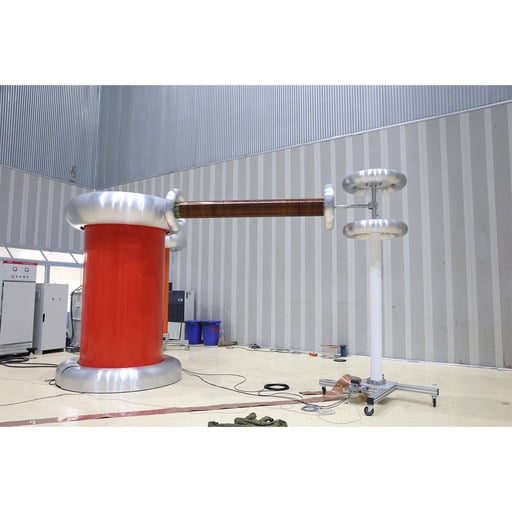
Overseas utility buyers need proof that every high-voltage set is accurate, thermally stable, and safe to discharge. Each DEMIKS system undergoes a four-part factory acceptance test at our Lingang bay matched to its model specification, before shipping.
4-Part Lingang Factory Routine Verification
- Verifying ±0.5% voltage and current metering accuracy on DTC and DXC consoles with the matched HV divider.
- Checking rated-load thermal stability and insulation resistance per the selected model’s duty cycle[4].
- Testing overcurrent and flashover trip protection (<20 ms cutoff on DVLF and digital consoles).
- Verifying sinusoidal waveform distortion (THD ≤ 1% on DBP-DL resonant systems) or DC ripple (≤ 0.5% on ZGF sets).
Capacitive Discharge & Interlock Protection
Substation crews cite residual capacitive charge as a field risk and the inability to confirm the integrity of safety interlocks as the main obstacles to confirming the safety of a system. A hard-short on an E-stop loop welds a ground hook to the termination and stresses the insulation. In accordance with OSHA 29 CFR 1910.269(o)(3)-(4)[6], we provide zero-start interlocks, E-stop loops, a 4 m grounding cable, and damping-resistor discharge rods before solid visible grounds.
Every shipment includes a serial-numbered factory routine test report, English operating manual, and a 12-month warranty with 3-month defect replacement (within three months of delivery). For overseas projects, we also send DEMIKS engineers for paid on-site installation, commissioning, and operator training, priced by engineer count and days required.
Six-Step Engineering Sizing, Factory Acceptance, and Global Delivery Process
We manage each order from initial capacitance sizing to system handover at the substation. Engineering and procurement teams track clear milestones at every stage.
Step 1: Specimen Load Review
Send us your specimen type, target voltage, test standard, capacitance (μF), and local mains supply details (including 50 Hz or 60 Hz frequency).
Step 2: 24h Engineering Proposal
Within 24 business hours, our engineers issue a matched BOM (HV unit, console, divider, and safety rods) with firm pricing.
Step 3: Assembly & Winding Build
Under our T/T terms (50% deposit and 50% balance before delivery), our Lingang shop builds the HV unit, English console, and protective resistors.
Step 4: Factory Routine Inspection
We verify ±0.5% console accuracy, overcurrent protection, and waveform limits, issuing your serial-numbered factory routine test report.
Step 5: Export Wooden Crating
Standard single-unit hipot testers ship within 15 days after payment confirmation in foam-lined export wooden cases.
Step 6: Handover & Field Support
Operate with the included English manual, or book DEMIKS engineers for paid on-site installation, commissioning, and operator training.
| Pre-RFQ Input Parameter | Why Our Engineers Need It | Example Buyer Specification |
|---|---|---|
| Specimen Type & Insulation | Prevents destructive DC testing on aged XLPE and selects proper PD shielding | 33 kV XLPE underground cable, 3.5 km per phase |
| Target Test Voltage & Duration | Determines cascade staging and thermal duty rating per governing standard | 38 kV RMS AC for 60 min (or 57 kV peak 0.1 Hz VLF) |
| Specimen Capacitance (μF) | Directly sets charging current Ic and reactive kVA / reactor inductance | 0.22 μF/km × 3.5 km = 0.77 μF per phase |
| Site Power & Mobility Limit | Matches single-phase 220 V vs three-phase 380/480 V supply and van lift limits | Single-phase 230 V, 50 Hz generator; 22 kg VLF-TD case |
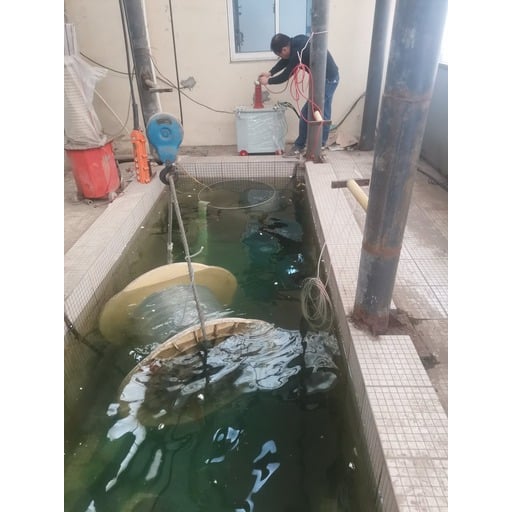
High-Voltage Test Systems Built in Shanghai and Global Export Markets
Shanghai DEMIKS Electric Power Technology Co., LTD (DEMIKS) was established in 2025 in the Lingang Special Area of the China (Shanghai) Pilot Free Trade Zone. We have exported high-voltage test equipment to Brazil, Peru, Argentina, the United States, Canada, Bulgaria, France, and Italy. Our systems serve utility contractors, cable plants, switchgear manufacturers, and electrical laboratories.
Engineering Cost & Logistics Mechanism Benchmark (Resonant & VLF vs. Grid-Frequency Transformer)
Why do utility contractors replace single-piece 50/60 Hz transformers on long cable feeders? Physics sets two hard multipliers.
- For a 1.0 μF medium-voltage cable tested at 60 kV RMS, calculated capacitive load is ~1,131 kVA at 50 Hz versus ~2.26 kVA at 0.1 Hz sinusoidal VLF[2], cutting charging current by 500× at equal RMS voltage.
- For 110 kV to 220 kV transmission cables tested at 20–300 Hz under IEC 60840 (≤150 kV) or IEC 62067 (>150 kV)[3], a DBP-DL resonant stack with Q ≥ 30 divides reactive kVA demand by the resonant quality factor.
Where Specific Hipot Architectures Are the Wrong Engineering Choice
Choosing the wrong waveform creates a severe risk of damaged cable insulation or an unmovable transformer. There is a misconception that high voltage testers are interchangeable across cables, switchgear, and arresters. The physical reason is catalog shortcuts do not always reflect the truth. The root cause is physical: AC, DC, VLF and Megohmmeters carry strict dielectric trade offs.
| Mismatched Scenario | Why It Is the Wrong Choice (Physical Mechanism) | Correct DEMIKS Alternative |
|---|---|---|
| Applying DC hipot to service-aged extruded XLPE cables | Applying dc hipot injects persistent space charge into water-tree micro-voids in aged XLPE, risking delayed breakdown under AC service[2]. High-voltage DC is not always safe even if the cable holds for 15 minutes. | Use DVLF / VLF-TD 0.1 Hz sinusoidal VLF (for MV cables per IEEE 400.2-2024) or DBP-DL 20–300 Hz series resonance. Reserve ZGF DC sets for IEC 60840 Clause 16.2 oversheaths and ZnO arresters. |
| Hauling heavy test transformers (50/60 Hz) for multi-km XLPE feeders | Hauling heavy test transformers above 100 kVA requires crane handling and high-current three-phase feeds. A single 50 Hz tank works on short busbars, but reactive kVA climbs rapidly when Ic = 2πfCV grows. | Specify modular DBP-DL series resonant reactors (44–540 kVA) for HV/EHV cables[3], or a 22 kg (48.5 lb) VLF-TD case for MV feeders. |
| Using a megohmmeter (hipot tester vs megger) as a withstand substitute | A 500 V–5 kV DC megohmmeter checks steady insulation resistance (MΩ/GΩ) below operating stress. It is not a substitute for an overvoltage dielectric withstand test and will not necessarily expose void flashover paths. | Run diagnostic insulation resistance before and after, paired with an AC, VLF, or resonant hipot tester sized to your standard test voltage. |
| Using unshielded standard transformers for low-pC partial discharge acceptance | Unshielded routine test transformers can introduce internal background discharge that masks incipient void activity inside GIS spacers or instrument transformers. | Specify our YDW PD-free AC hipot transformer paired with a shielded capacitive divider when your test specification requires low-pC PD verification. |
High-Voltage Hipot Tester, Insulation Resistance, and Procurement FAQs
1. What is the difference in hipot tester vs megger testing, and when is a grounding resistance tester needed?
A megohmmeter applies 500 V to 5 kV DC to trend non-destructive insulation resistance in megohms or gigohms. A hipot tester applies elevated AC, DC, or VLF test voltage (5 kV to 400 kV across our lineup) to verify dielectric strength against breakdown. Before energizing any HV bay, crews use a grounding resistance tester as part of a site safety assessment that also considers protective bonding, fault current, clearing time, and permissible touch and step voltages.
2. How do I calculate kVA using the hipot test formula for capacitive power cables?
Calculate charging current Ic = 2πfCV (frequency in Hz, capacitance in farads, RMS voltage in volts) and multiply by test voltage V to find reactive kVA. A 0.48 μF cable at 22 kV RMS and 50 Hz draws 3.32 A, which equals 73.0 kVA of reactive output before adding exciter headroom. Run exact numbers for your feeder in our Capacitive kVA Calculator.
3. What is the standard hipot test voltage for 11kv cable commissioning and maintenance?
Under IEEE 400.2-2024 for shielded 11 kV (6.35/11 kV) XLPE cables, 0.1 Hz sinusoidal VLF uses 19 kV RMS (27 kV peak) for acceptance and ~14–15 kV RMS for maintenance. As per IEC 60502-2, utilities use a level of 2.5U0 (~15.9 kV RMS AC at 20–300 Hz) or 3U0 VLF, depending on the edition and duration specified. Always verify the edition required by the utility owner prior to energization.
4. Why is DC hipot avoided on aged XLPE cables, and where are ZGF DC testers used?
High-voltage DC traps space charge around water trees in service-aged XLPE and can also trigger delayed AC service faults. DC test equipment supports ZnO arrester leakage current measurements at 0.75 Udc1mA, cable oversheath testing per IEC 60840 Clause 16.2, and DC withstand testing of PILC cables.
5. What frequency window do IEC 60840 and IEC 62067 allow for high-voltage cable AC commissioning?
IEC 60840:2020/AMD1:2023 Clause 16.3.1 (>30–150 kV, Um ≤ 170 kV) and IEC 62067 (>150–500 kV) specify 20 Hz to 300 Hz sinusoidal AC for extruded cables. Buyer-manufacturer agreement permits down to 10 Hz in special cases. Our DBP-DL resonant systems tune across 20–300 Hz.
6. How do crews safely discharge a cable after a high potential test for cable circuits?
Return the voltage regulator to zero and open the visible mains supply disconnect first. Discharge the capacitive specimen through a current-limiting damping resistor rod to reduce the charge and stop voltage regulator recovery from dielectric absorption. Apply and maintain a solid visible ground lead thereafter, in accordance with OSHA 29 CFR 1910.269(o)(3). [6]
7. What drives hipot test equipment price across 30 kV to 400 kV sets?
Price scales with kV clearance, copper winding and silicon-steel core kVA mass, insulation medium (YDJ oil vs YDQ SF6 vs YDW PD-free), and console automation. Send your specimen specs for an itemized quote within 24 business hours.
8. What is your MOQ, sample policy, and standard shipping lead time?
MOQ is 1 set, and free samples are not offered. Standard single-unit testers ship within 15 days after payment confirmation.
9. Do units include a calibration report and warranty replacement?
Yes. Every unit ships with a serial-numbered factory routine test report, English operating manual, a 12-month warranty, and 3-month defect replacement (within three months of delivery).
10. Can DEMIKS engineers travel overseas for on-site commissioning?
Yes. Following exports to Brazil, Peru, Argentina, the US, Canada, Bulgaria, France, and Italy, we dispatch engineers for paid on-site installation, commissioning, and operator training.
Request an Engineer-Reviewed Hipot Configuration and Quotation
Send us your specimen type, target voltage, capacitance (or cable length), and local mains supply. Our Shanghai Lingang engineers will size reactive current and return an itemized BOM quotation within 24 business hours.
References & Sources
- International Electrotechnical Commission (IEC), IEC 60060-1:2025 High-voltage test techniques – Part 1: General definitions and test requirements (official scope for Um > 1.0 kV AC and > 1.5 kV DC; paired with IEC 60060-2 laboratory/factory and IEC 60060-3 on-site measuring system standards): https://webstore.iec.ch/en/publication/65088
- United States Patent US6169406B1, Method and apparatus for testing electrical insulation with very low frequency sinusoidal high voltage (<1 Hz / 0.1 Hz VLF reactive power reduction and avoidance of DC space-charge damage in extruded cables): https://patents.google.com/patent/US6169406B1/en
- INMR Technical Review, Type & Commissioning Testing of High Voltage Cables (IEC 60840 36–170 kV and IEC 62067 170–550 kV 20–300 Hz resonant AC commissioning procedures): https://www.inmr.com/type-commissioning-testing-of-high-voltage-cables/
- DEKRA Certification & Testing Overview, Medium and High-Voltage Testing Standards & Requirements (mapping IEC 60060, IEC 60502, IEC 62271 switchgear, and IEC 60076 power transformer dielectric acceptance testing): https://www.dekra.com/en/medium-and-high-voltage-testing
- T&D World Utility Diagnostics Report, KEPCO Evaluates Underground Medium-Voltage Cable Diagnostics and VLF Field Testing (0.1 Hz VLF and tan-delta diagnostic field deployment on utility distribution feeders): https://www.tdworld.com/underground-cables/article/20971784/evaluating-underground-mv-cables
- U.S. Occupational Safety and Health Administration (OSHA), 29 CFR 1910.269(o) Electric Power Generation, Transmission, and Distribution – High-Voltage Testing Safety, Test-Area Guarding, and Visible Grounds: https://www.osha.gov/laws-regs/regulations/standardnumber/1910/1910.269_2